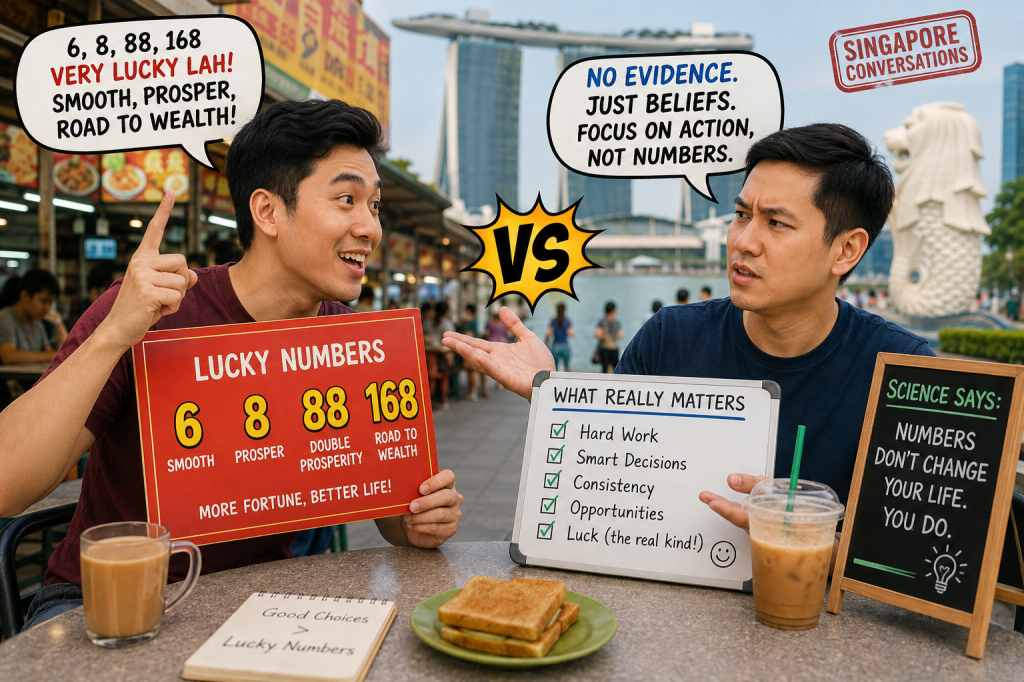
Arun: Bro, I found the perfect condo.
Daniel: Finally. How much?
Arun: That’s the problem. The unit is amazing, but it’s 13-04.
Daniel: And?
Arun: I can’t take it.
Daniel: Why? Is the ceiling leaking?
Arun: Worse. The number is unlucky.
Daniel: Ah. Here we go again.
Arun: Don’t laugh. Numbers matter. I specifically look for 6, 8, or combinations like 88 or 168. They’re considered lucky because of how they sound in Chinese.
Daniel: You mean 6 for things going smoothly, 8 for prosperity, and 168 for something like “road to wealth”?
Arun: Exactly! See? You understand.
Daniel: I understand the tradition. I just don’t understand why a number printed on a door should influence your bank account.
Arun: Because symbolism matters. Look around Singapore. People pay more for units with 8 in the address. Car plates with 8 can cost a fortune. Businesses love numbers like 88.
Daniel: That’s evidence that people believe the numbers are lucky. It isn’t evidence that the numbers actually make people richer.
Arun: But if so many people believe it, there must be something behind it.
Daniel: Not necessarily. Millions of people believing the same thing doesn’t turn it into a physical law.
Arun: You sound like my physics professor.
Daniel: Your physics professor probably didn’t want to pay an extra S$80,000 for a car plate because it had three eights.
Arun: Actually, that’s a good investment.
Daniel: How?
Arun: Someone else will buy it from me later.
Daniel: So the number is valuable because people believe it’s valuable.
Arun: Exactly!
Daniel: That’s different from saying the number itself brings prosperity.
Arun: Okay, but I’ve seen things happen. My uncle’s company moved into an office with 168 in the address. Business improved dramatically the next year.
Daniel: Did he also hire five new employees, launch two products, and get a major client that year?
Arun: Yes.
Daniel: Then maybe those things explain the growth better than the number.
Arun: You always have an explanation.
Daniel: That’s kind of the point.
Arun: But what about the fact that 8 keeps appearing in successful people’s lives? You see it everywhere.
Daniel: That’s confirmation bias.
Arun: Don’t throw psychology words at me.
Daniel: I’m serious. Suppose you believe 8 is lucky. You notice every successful business with an 8 in its name or address. But you don’t remember the thousands of successful businesses with completely ordinary numbers.
Arun: Hmm.
Daniel: It’s like buying a blue shirt and suddenly noticing blue shirts everywhere. The world didn’t suddenly become more blue. Your brain just started paying attention.
Arun: Still, I would rather choose 168 than 137 if both apartments are identical.
Daniel: That’s completely fine.
Arun: So you’re admitting I’m right?
Daniel: No. I’m saying you can choose it because you like what it represents. That’s different from claiming it causes wealth.
Arun: What’s the difference?
Daniel: Imagine two identical apartments. One is 168 and one is 137. If you choose 168 because the number makes you feel optimistic every time you come home, that’s a personal preference. But if you say, “The 168 apartment will make me financially successful,” that’s a claim about reality. That claim needs evidence.
Arun: What kind of evidence would convince you?
Daniel: We’d need something like a large study comparing people who deliberately chose lucky numbers with people who didn’t, while controlling for income, education, location, property quality, business sector, and other factors.
Arun: That’s a lot of work just to prove my lucky number works.
Daniel: Exactly. And if it really had a strong effect, we’d expect the effect to show up consistently.
Arun: Maybe science just hasn’t discovered it yet.
Daniel: That’s possible in principle. But “science hasn’t disproved it” isn’t evidence that it’s true.
Arun: You really enjoy ruining people’s fun.
Daniel: Not at all. I think traditions are interesting. I just don’t want you paying S$30,000 extra for a number and then calling it an investment.
Arun: Wait. Thirty thousand?
Daniel: You told me yesterday the agent wanted an extra S$30,000 because the unit number ended in 88.
Arun: Yes.
Daniel: Then you’re not buying prosperity. You’re buying a number that other people also believe is prosperous.
Arun: When you put it that way, it sounds ridiculous.
Daniel: It can still have market value. If enough buyers want 88, sellers can charge more. That’s basic supply and demand.
Arun: So you’re saying lucky numbers can have real economic value even if they don’t have supernatural power?
Daniel: Exactly.
Arun: That’s actually interesting.
Daniel: And there’s another thing. These traditions aren’t completely random. Language and culture shape how people interpret numbers. If a number sounds like a positive word, people may associate it with good fortune. That’s psychologically and culturally real.
Arun: So you don’t think people are stupid for following it?
Daniel: Not at all. Humans have always attached meaning to symbols. Flags, wedding rings, lucky charms, religious symbols, numbers—we give objects meaning because we’re social creatures.
Arun: Then why are you always telling me to stop checking apartment numbers?
Daniel: Because last week you rejected a perfectly good apartment because the unit was 16-04.
Arun: Four.
Daniel: Yes.
Arun: Four sounds like death in Chinese. I’m not sleeping there.
Daniel: You also rejected the next apartment because it was on the 13th floor.
Arun: That’s different.
Daniel: Then you rejected another one because the previous tenant had moved out on a Tuesday.
Arun: That was suspicious.
Daniel: At this rate, you’ll find a condo with 168 on the door, 8 floors, 6 bedrooms and a swimming pool shaped like a dragon.
Arun: Now that sounds perfect.
Daniel: And you’ll discover it’s S$2.5 million.
Arun: Hmm…
Daniel: See? Suddenly you’re willing to negotiate with superstition when money is involved.
Arun: Fine. Maybe I shouldn’t let numbers control every decision.
Daniel: That’s all I’m saying.
Arun: But if the choice is between two identical units, I’m still choosing 168.
Daniel: Go ahead.
Arun: And if I become rich?
Daniel: I’ll congratulate you.
Arun: And if I become very rich?
Daniel: I’ll remind you that you got rich because you worked hard, made good decisions and got lucky in the normal statistical sense.
Arun: And I’ll remind you that my unit number was 168.
Daniel: Deal.
Arun: Actually, wait.
Daniel: What now?
Arun: What’s your unit number?
Daniel: 04-13.
Arun: Bro…
Daniel: What?
Arun: I’m not visiting you anymore.
Daniel: Fine. I’ll come to your 168 apartment.
Arun: You better. But bring coffee.
Daniel: Six dollars?
Arun: Make it eight.
Daniel: You’re impossible.
Arun: Prosperity, my friend.
Daniel: Confirmation bias, my friend.
Arun: Same thing.
Daniel: Absolutely not.
Arun: Fine. But I’m still picking 168.


Tell Us What You Think