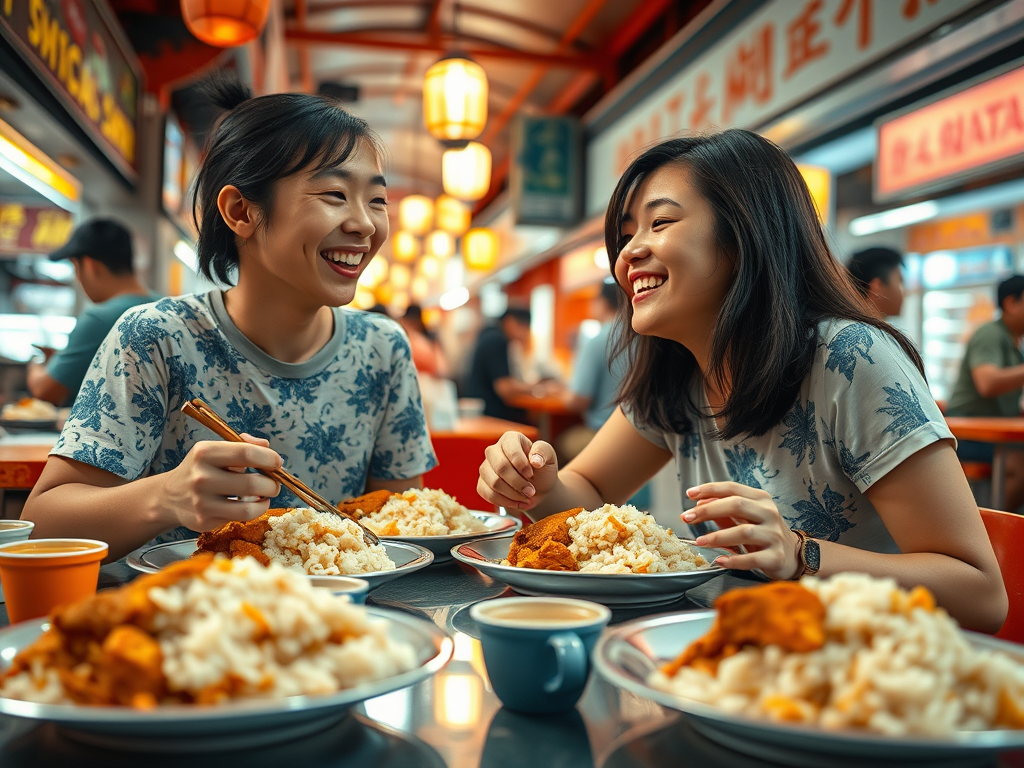
Setting: A hawker centre in Singapore, lunchtime. Plates of chicken rice and kopi on the table.
Mei Ling: Eh Arjun, finish your rice properly lah. Don’t leave those few grains there.
Arjun: (laughs) It’s like five grains only. The chicken rice uncle won’t come after me.
Mei Ling: Not the uncle! Your future wife will have acne and pockmarks if you waste rice. My grandma always say one.
Arjun: Serious ah? So my marital destiny is controlled by leftover carbohydrates?
Mei Ling: Don’t joke. It’s disrespectful. Rice is precious. Last time got war, got hardship. If you waste, heaven will punish you through your spouse’s face.
Arjun: That escalated very fast.
Mei Ling: I’m not kidding. When my cousin was young, he always leave rice. Now his wife really got acne problems.
Arjun: Mei Ling… acne is caused by hormones, genetics, bacteria, clogged pores. Not by your cousin’s primary school eating habits.
Mei Ling: But the timing so coincidental!
Arjun: Confirmation bias. You only notice examples that fit the belief. What about people who finish every grain and still marry someone with acne?
Mei Ling: Maybe they waste other things.
Arjun: Wah, the rule very flexible ah.
Mei Ling: You don’t understand. In Asian culture, rice is life. My grandma grew up in Malaysia during tough times. She said every grain is like a drop of sweat from the farmer.
Arjun: That part I respect. Food waste is a real issue. In Singapore we import more than 90% of our food. We shouldn’t waste.
Mei Ling: Exactly! So finish it.
Arjun: I agree about not wasting. But I’ll finish because of sustainability, not because my future wife’s skin is on the line.
Mei Ling: Same outcome what.
Arjun: Motivation matters. If you tell kids, “Finish your rice or your spouse ugly,” they grow up fearing some imaginary punishment instead of understanding food security.
Mei Ling: But fear works. Last time my mother tell me that, I scared until plate shine like mirror.
Arjun: That’s behavioral conditioning, not cosmic justice.
Mei Ling: You very the science type.
Arjun: Obviously. Think about it—if acne is linked to someone else’s leftover rice, dermatologists in Singapore can close shop already. They just need to check childhood dining habits.
Mei Ling: (laughs) “Doctor, my husband got pimple.” “Madam, did you leave rice in 1998?”
Okay lah, sounds ridiculous when you say like that.
Arjun: Exactly. But your grandma’s core message—respect food—that’s valid. Instead of supernatural punishment, we can talk about farmers’ effort, carbon footprint, cost of imports.
Mei Ling: You turning hawker centre into TED Talk already.
Arjun: Free one.
Mei Ling: Still… when I see grains left behind, I feel uneasy. Like bad luck.
Arjun: That’s emotional conditioning. Traditions stick because they attach strong imagery. Ugly spouse very memorable.
Mei Ling: True. Nobody wants that risk.
Arjun: But look around. See that couple? They’re sharing one plate, laughing. You think they checked each other’s childhood rice records before dating?
Mei Ling: Hopefully not.
Arjun: Relationships depend on compatibility, communication, kindness—not rice residue.
Mei Ling: Okay professor, then why so many cultures have similar sayings?
Arjun: Because scarcity was common historically. When resources are limited, societies create strong narratives to prevent waste. Fear is efficient. Science wasn’t accessible to everyone, so stories did the job.
Mei Ling: So you’re saying it’s social engineering from ancient times?
Arjun: Basically, yes. Effective but not literally true.
Mei Ling: Hmm. So if I finish my rice, it’s for farmers and environment. Not for my future husband’s face.
Arjun: Correct. Though finishing it won’t hurt your chances either.
Mei Ling: Wah, smooth ah.
Arjun: See? Good communication already improving my spouse prospects.
Mei Ling: Fine lah. I’ll try to think logically. But just in case, you better finish those five grains.
Arjun: (sighs dramatically, scoops them up) For sustainability… and to protect my hypothetical wife’s flawless skin.
Mei Ling: Good choice. Singapore needs more responsible citizens.
Arjun: And fewer dermatology superstitions.
They clink their kopi cups, laughing—one holding onto tradition, the other to science, both agreeing at least on one thing: wasting food in Singapore is not a good look, acne or not.


Tell Us What You Think