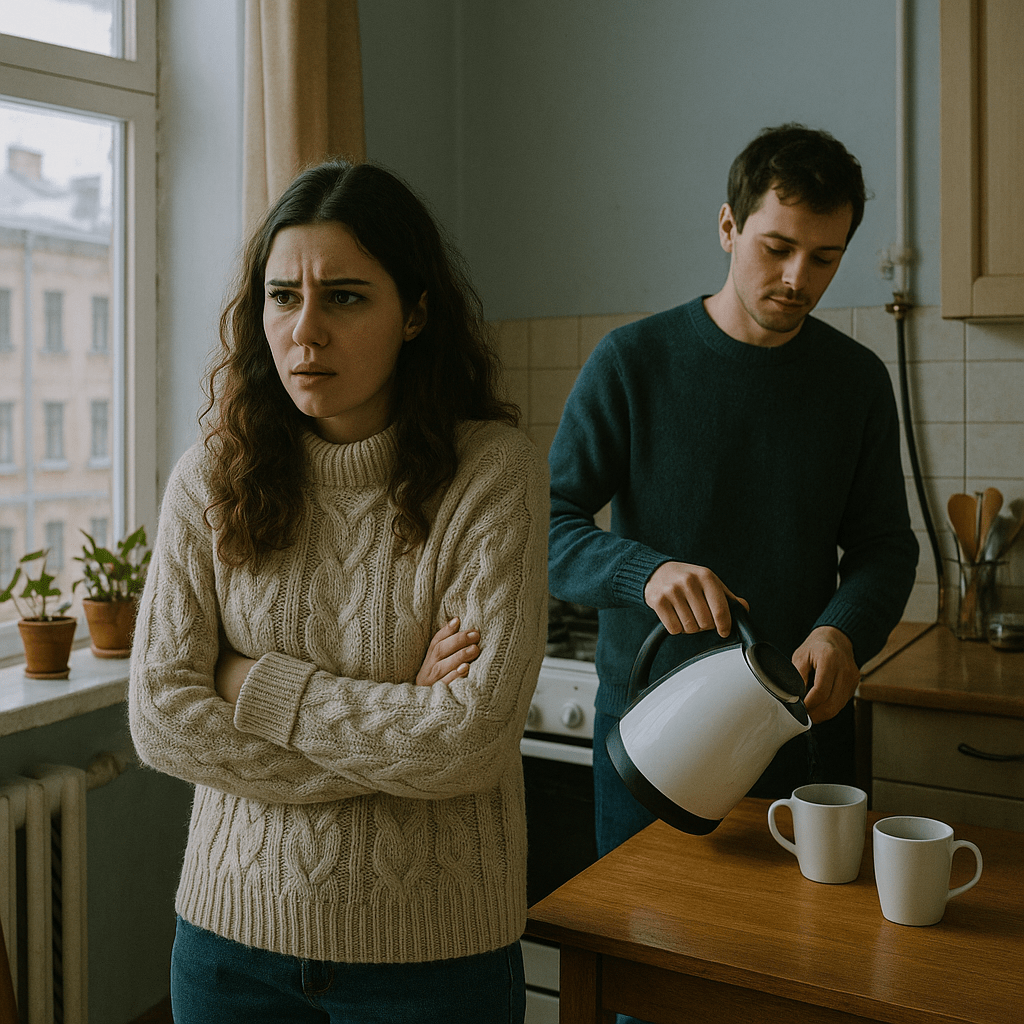
Setting:
It’s a chilly afternoon in Saint Petersburg. Dima is making tea while Anya, wrapped in a thick sweater, paces nervously in the kitchen.
Anya: (looking pale)
Dima, I’m telling you, this is bad. Really bad.
Dima: (pouring hot water into two mugs)
You’re being dramatic again. What happened this time? Did your horoscope say Mercury is breakdancing in retrograde?
Anya:
Worse. There was a dead bird on my windowsill this morning. A crow, no less. I swear it was staring at me with its lifeless eyes. That’s definitely a bad omen.
Dima: (smirking, handing her a mug)
Ah yes, the ancient prophecy of “Crowcus Mortemus.” It’s said whoever sees the lifeless bird shall suffer seven minor inconveniences and a delayed bus.
Anya: (ignoring the sarcasm)
I’m serious, Dima! My бабушка always said dead birds near the home bring death or misfortune. And you know what happened the last time? My cousin Lena twisted her ankle two days later!
Dima:
And I’m sure the crow personally orchestrated the whole thing—probably pushed Lena down the stairs telepathically.
Anya: (glaring)
You always mock me when I talk about these things. But Russians have believed this for generations. It’s not just me.
Dima:
I know, I know. Look, I’m not saying the belief doesn’t exist. I’m just saying… we’ve got better explanations now. Maybe the bird flew into the window and broke its neck. Happens all the time. It’s physics, not a curse.
Anya: (sipping tea and softening a little)
But why my window? Why not fly into Marina’s place next door? She plays accordion at 2 AM—she deserves the omens.
Dima: (laughs)
Maybe even birds have taste in music. Look, I read an article that birds sometimes get disoriented by reflections in glass. It’s called window strike. They see the sky, think they can fly through, and bam—game over.
Anya:
Okay, smartypants, explain why it’s always the spooky-looking ones—crows, ravens, blackbirds. Why not a nice little parrot?
Dima:
Because parrots don’t hang around snowy Russian rooftops in January? And anyway, crows are super smart! They remember faces, use tools, even hold grudges. Maybe that one just had a bad day.
Anya: (quietly)
Still… it made me feel uneasy. Like something dark is hovering over me.
Dima: (gently)
I get that. Sometimes it’s not about the bird—it’s about what we’re already feeling. You’ve been stressed lately, right? Work’s been chaos, your landlord’s weird, and you haven’t slept well. Maybe the crow just… added feathers to your anxiety.
Anya: (chuckles in spite of herself)
“Feathers to my anxiety.” You should write poetry.
Dima:
Only if you promise not to read it and summon a pigeon spirit or something.
Anya: (laughs)
Alright, alright. Maybe I do go overboard sometimes. But can you blame me? It’s comforting to feel like there’s a pattern. Like someone—or something—is in control.
Dima:
Totally. Beliefs help people cope. That doesn’t make you silly—it makes you human. I just think we should be careful not to give too much power to randomness. Sometimes a dead bird is just… well, a very unlucky bird.
Anya: (sighs, then smirks)
Fine. But if my kettle breaks and my phone dies tonight, I’m blaming the crow. And you.
Dima:
Deal. I’ll light a candle, chant “Rasputin’s remix,” and perform a Wi-Fi healing ritual.
Anya:
You’re impossible.
Dima:
And you’re delightfully paranoid. That’s why we work.
[They clink mugs and sip quietly, the tension broken by humor, each a little closer to understanding the other’s worldview—one feather at a time.]


Tell Us What You Think