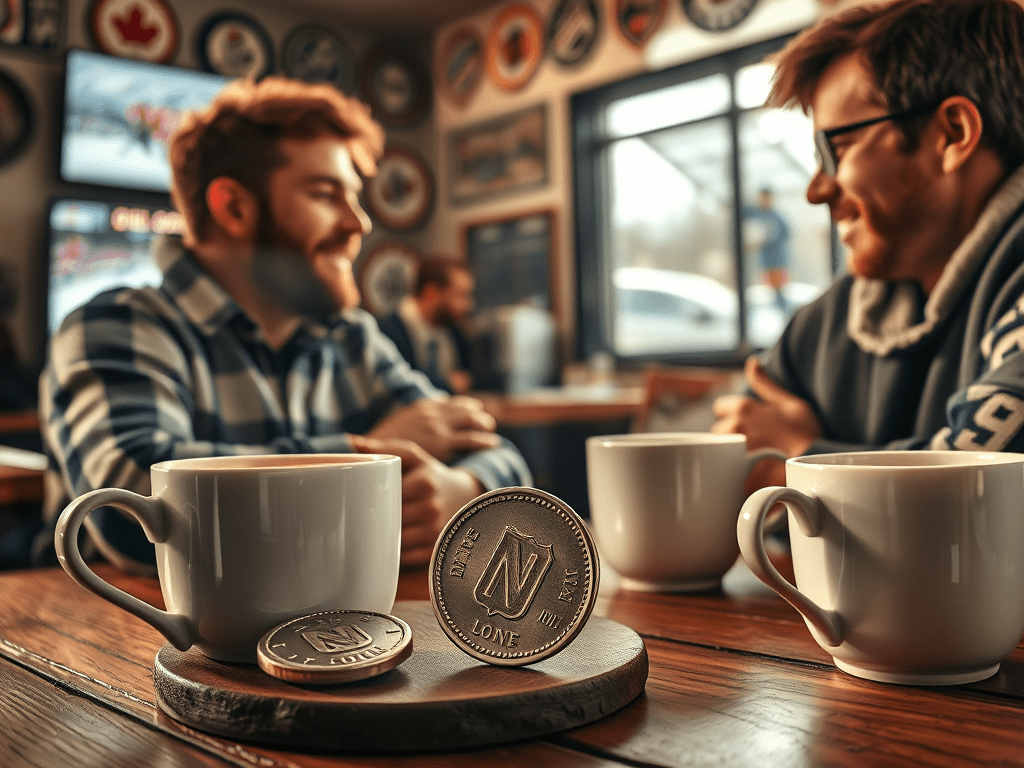
Setting:
A chilly Saturday morning at a local coffee shop in Ottawa. The NHL game is on the TV in the corner, and two friends—Raj, a rational thinker and software engineer, and Mike, a die-hard hockey fan and proud believer in hockey superstitions—are sipping their double-doubles and watching the pre-game warmup.
Mike: (eyes glued to the screen)
Did you hear? The Sens snuck a loonie under the centre ice at practice yesterday. I’m telling you, Raj, we’ve got this game in the bag.
Raj: (grinning)
You mean to tell me, in 2025, with AI coaches, biometric tracking, and advanced analytics, a coin under the ice is what’s going to win them the game?
Mike:
Hey, don’t mock the magic, man. Remember the 2002 Olympics in Salt Lake City? Canada buried a loonie under centre ice, and boom—we won gold. Both men’s and women’s teams!
Raj:
Yeah, and we also had Wayne Gretzky as executive director and a stacked roster. Coincidence?
Mike:
You say “coincidence,” I say “cosmic alignment.” It’s hockey karma, bro.
Raj: (laughs)
You sound like my grandma talking about coconut oil curing everything from baldness to broken hearts. It’s a fun story, but it’s not evidence.
Mike: (leans in, mock serious)
Listen, I tried it myself in high school. Our team was on a losing streak. One night, I slid a loonie under the outdoor rink before practice. Next thing you know, we win 5-2. Coin scored two goals. His name was Coin!
Raj:
That’s just poetic irony, not proof. Did you run a controlled study? Double-blind? Peer-reviewed?
Mike:
No, but we had orange slices and Coach Gary’s speech about “playing for the loonie.” That’s practically a randomized trial in hockey terms.
Raj:
Look, I get it. Superstitions give people a sense of control—especially in unpredictable sports. But attributing wins to a hidden coin ignores the skill, the training, the strategy.
Mike: (shrugs)
Why can’t it be both? A little physics, a little metaphysics. I’m not saying the coin controls the puck, but maybe it boosts morale. A placebo for the ice.
Raj:
Now that I can get behind. If it’s a psychological edge—fine. But let’s call it what it is: mental priming, not magical talisman.
Mike:
You’re no fun. Next, you’ll tell me taping my stick a certain way doesn’t “channel the puck’s energy.”
Raj:
I will tell you that. And also that your lucky socks have more bacteria than luck.
Mike: (deadpan)
Those socks carried me through peewee, junior varsity, and two beer leagues. Show some respect.
Raj: (laughs)
I’ll respect them—at a distance. Look, Mike, believe in your loonie if it helps. Just don’t bet your mortgage on it.
Mike:
Too late. I also put a quarter in my glove for double luck. (winks)
Raj:
At this rate, you’ll be skating around with the contents of a piggy bank.
Mike:
As long as we win, I don’t care if I have to freeze a toonie inside my helmet.
Raj:
Just don’t expect me to call it science when your helmet tips over mid-period from the weight.
Mike:
Deal. But if we win today? I’m sending you a loonie in the mail. You’ll feel the luck.
Raj:
I’ll be waiting—with my microscope.
[They raise their coffee cups, clink them, and settle in to watch the puck drop—one still believing in coins and fate, the other in data and stats, both cheering for the same goal.]


Tell Us What You Think