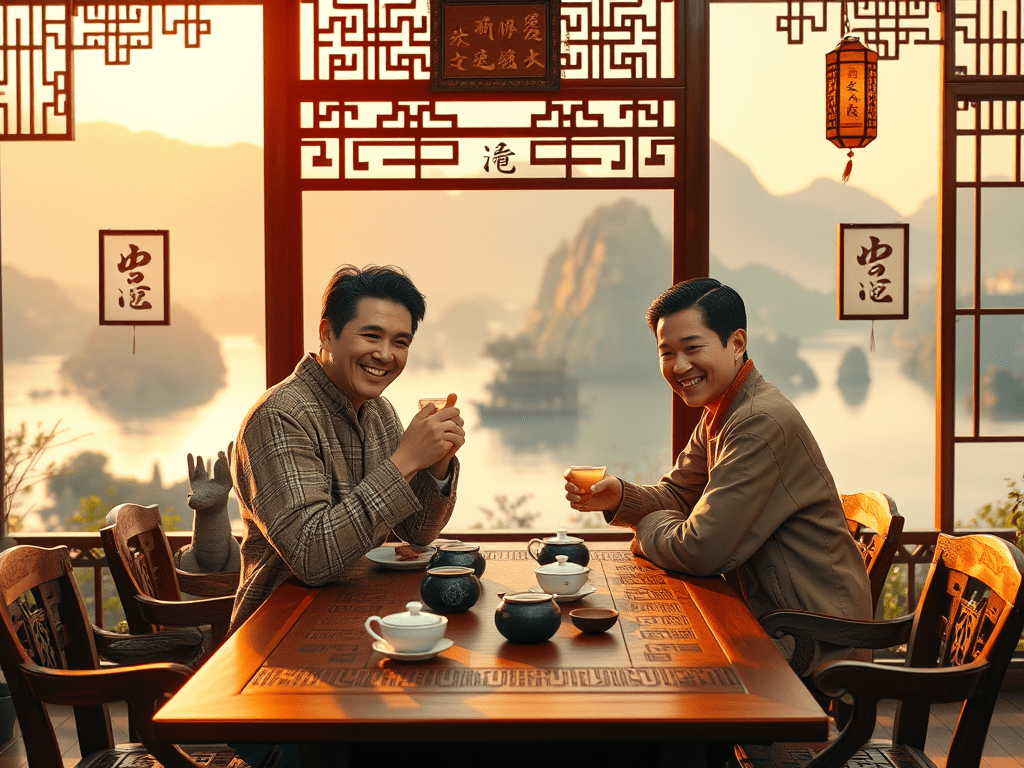
[Scene: A cozy teahouse in Hangzhou, overlooking the West Lake. Wei and Jian sit at a wooden table sipping longjing tea.]
Wei: (grinning and gesturing excitedly) Jian, I finally found it! A perfect apartment—mountains in the back, river view in front. The feng shui master says it’s guaranteed to bring prosperity.
Jian: (raising an eyebrow) Ah, the magic formula again: “mountains behind, water in front.” You know, Wei, I admire your enthusiasm, but have you ever wondered why that’s supposed to work?
Wei: (laughs) Come on, Jian! It’s thousands of years of wisdom. You think our ancestors were just making it up?
Jian: Well… maybe not making it up, but they probably didn’t have randomized controlled trials back in the Ming Dynasty.
Wei: (waves hand dismissively) You scientists always want data! But listen—my cousin bought an apartment without mountains or water, just ugly high-rises all around. Within six months, he lost his job and his cat ran away!
Jian: (grinning) Maybe the cat ran away because of the ugly view.
Wei: Very funny. But seriously, you can’t deny the pattern. Good feng shui homes bring good luck. My parents’ house faces a lake, and their business has thrived for years.
Jian: Or maybe their business thrived because your dad works 16 hours a day and your mom knows every customer by name?
Wei: (pretending to be shocked) Jian! How dare you insult the power of qi!
Jian: (smiling) I’m not insulting it. I’m just saying we should separate correlation from causation. Lots of people live in apartments with no river or mountain nearby, and they’re perfectly successful.
Wei: Fine. But explain this, Mr. Rational—why do the apartments with a mountain view sell faster and for more money?
Jian: Easy: people like nice views! It’s human psychology, not cosmic energy. A mountain behind means a nice green landscape, less noise, maybe better air quality. And a river view? Come on, who wouldn’t want that?
Wei: (pouting) You’re so practical, it’s boring. Where’s your sense of mystery?
Jian: I like mystery in my novels, not my real estate deals.
Wei: (smirking) But what about your sleep? Don’t you feel calmer near water? That’s qi working!
Jian: Actually, studies show that nature reduces stress hormones, but it’s got nothing to do with invisible energy. It’s our brains responding to pleasant environments.
Wei: So… you’re telling me feng shui is just good interior design and location sense dressed up in fancy words?
Jian: Pretty much. Though I admit, some feng shui rules are just common sense—don’t put your bed under a heavy beam, don’t block the front door with a giant shoe rack. That’s not magic, that’s not wanting to bump your head at midnight.
Wei: Hmm. You know, you’re annoyingly logical.
Jian: And you’re delightfully superstitious.
Wei: But tell me, Jian—if I invite you over to my mountain-and-river-view apartment, will you at least pretend to feel the qi flowing?
Jian: (laughing) Only if you serve me the good tea and not that cheap jasmine stuff you tried last time.
Wei: Deal! And maybe, just maybe, you’ll start to believe when you see how happy I am there.
Jian: Or maybe I’ll just enjoy the view and the tea, and you can keep your feng shui.
Wei: Fair enough, my skeptical friend. But don’t come crying to me when your apartment without a mountain view brings you bad luck!
Jian: (grinning) I’ll take my chances. And if I ever move, I’m hiring you as my personal feng shui consultant—if only for the entertainment.
Wei: (laughing loudly) Deal!
[They clink teacups, smiling across the table as the sun dips behind the mountains.]


Tell Us What You Think