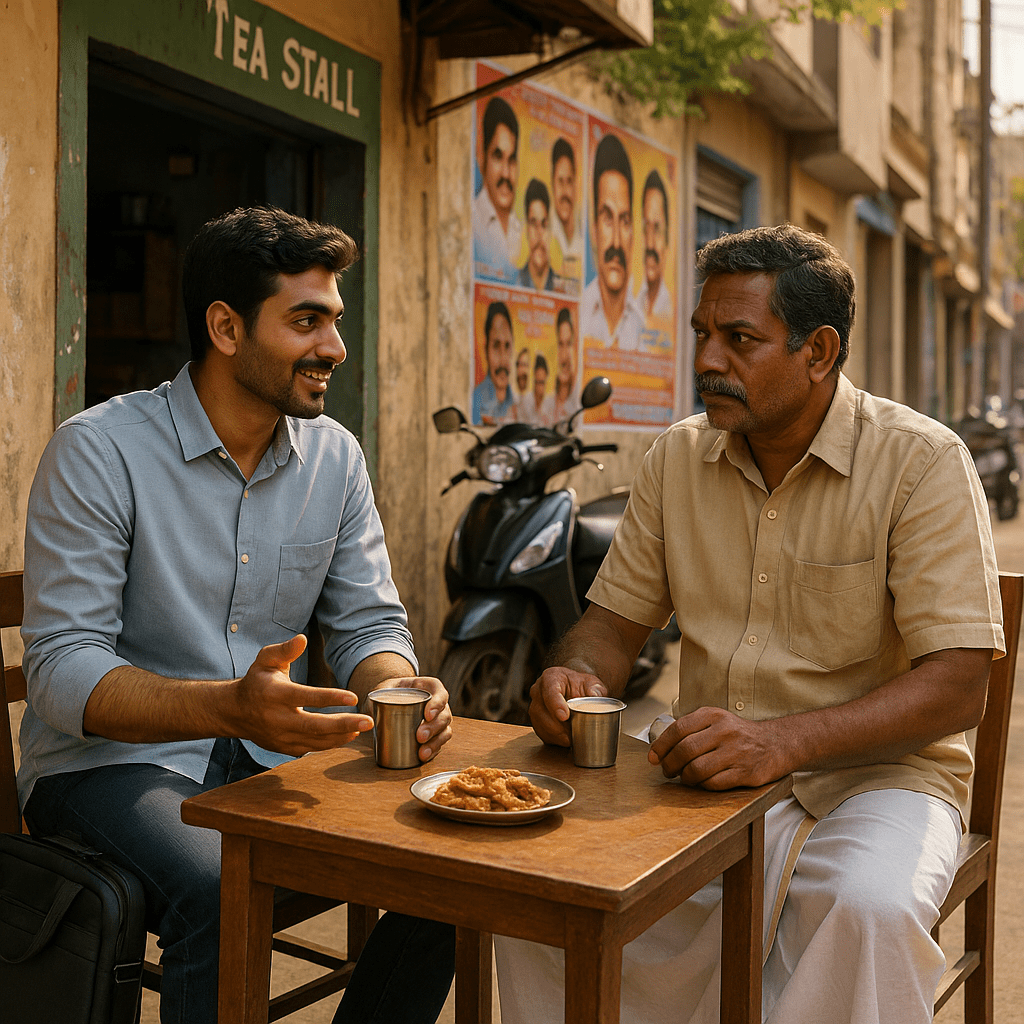
Setting: A small tea shop in Madurai. It’s a lazy Sunday afternoon. Two friends—Ravi, a software engineer with a scientific mindset, and Gopi, a village schoolteacher with strong traditional beliefs—are chatting over filter coffee and murukku.
Gopi: (sipping his coffee) You know, Ravi, my uncle’s goat refused to eat on the new moon day… and just like that, the next week, our neighbor’s son fell from the coconut tree. Clear sign something bad was coming.
Ravi: (laughs) Gopi, are you seriously linking a goat’s appetite to someone falling off a tree? That poor guy probably slipped because he was wearing chappals on wet bark!
Gopi: No da, listen. In our village, we’ve always known these things. If an animal behaves unusually, it’s a warning. Even my thatha used to say—“Aattu azhuthaa, kaariyam varum”—if the goat cries strangely, something’s going to happen. It’s not coincidence.
Ravi: Hmm. So by that logic, if my cat ignores me on a Sunday, should I cancel all meetings for the week?
Gopi: You laugh now, but these are time-tested methods. People have used animal sacrifices and omens for generations—chickens, goats, even pigeons. You look at how the animal reacts before or after the sacrifice. If the goat trembles or turns a certain way, it tells you whether an event will go well or not.
Ravi: Gopi, I get that it’s tradition, and I respect that. But scientifically, there’s no evidence that a goat’s reaction has anything to do with a business deal, a marriage proposal, or someone’s health. It’s just random behavior. Animals tremble or turn for all kinds of reasons—temperature, fear, even flatulence!
Gopi: (laughing) Flatulence-a? Dei, this is serious. You can’t dismiss it like that.
Ravi: Okay, let me ask—has it ever gone wrong? Like, you got a “good” sign but something bad happened?
Gopi: Hmm… well… once, the chicken circled to the right after being sacrificed, which was a good sign. But then my cousin’s arranged marriage collapsed the next week because the groom’s side asked for a BMW.
Ravi: Exactly! So maybe the omen didn’t predict greedy in-laws, eh?
Gopi: (grinning) Fair point. But sometimes science can’t explain everything either. How do you explain when my friend avoided a journey because of a bad omen, and then the bus he was supposed to take broke down on the highway?
Ravi: Confirmation bias, da. We remember the times the omens “worked” and forget the hundred times they didn’t. Like when I wear my lucky socks and India wins the match—I think I helped, but in reality, it’s just Rohit Sharma doing his job.
Gopi: Hmm… you’re saying it’s all in the mind?
Ravi: Mostly. Our brains are wired to find patterns, even when they don’t exist. Especially when we’re anxious or uncertain. So rituals give a sense of control. It’s human.
Gopi: But people feel comfort in it. My aunt can’t even start a trip without cracking a coconut and waiting to see how it breaks.
Ravi: That’s fine if it gives emotional peace. My issue is when people hurt animals or spend too much money out of fear. Why not do something more meaningful—like donate a meal to someone in need and wish for good luck?
Gopi: Hmm… okay, but I still say a trembling goat is better than an unreliable horoscope app!
Ravi: (laughs) Touché! But next time your goat acts weird, maybe take it to a vet first, not an astrologer.
Gopi: Agreed, but only if you agree to come to the village festival and not complain about the rituals.
Ravi: Deal. As long as I get sakkarai pongal and no one sacrifices anything in front of me.
Gopi: Done. But if you hear a goat sneeze thrice, you better not get on that bike!
Both laugh, finishing their coffee, their worldviews still different—but friendship stronger than ever.


Tell Us What You Think