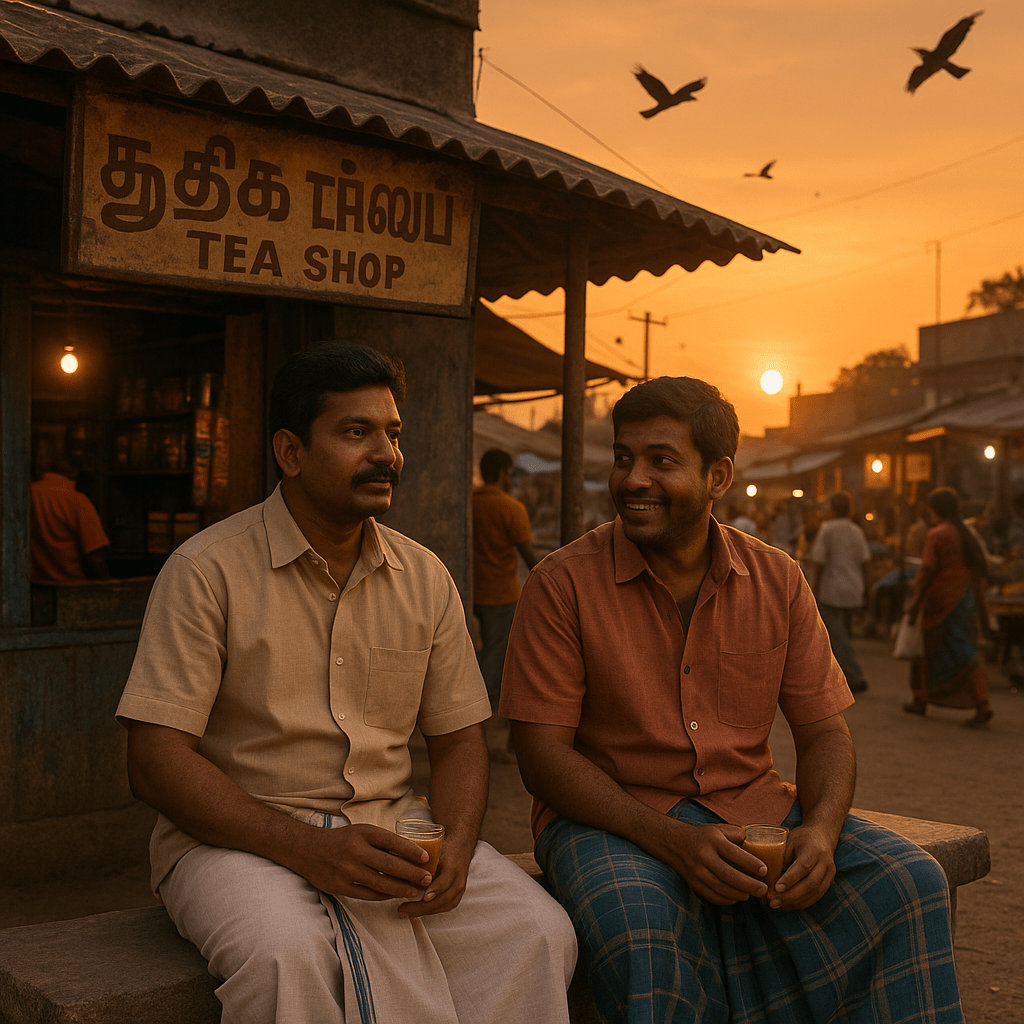
[Scene: A small tea shop in a Tamil Nadu village. The sun is setting. Crows are cawing. Two friends, Ravi and Muthu, sit on a stone bench sipping cutting chai and watching the bustle of the local market.]
Muthu:
Ravi, you won’t believe what happened today! Our village priest said this year’s yield will double because we offered arisi urundai (rice balls) mixed with chicken blood to Karuppasamy. It’s working, da!
Ravi:
(Laughs) Muthu, please. Next you’ll tell me the monsoon came early because someone sacrificed a goat in a lungi made of turmeric threads.
Muthu:
Don’t mock, da! You city fellows may not understand, but traditions like these have kept our village alive for generations. We did the same ritual during the 2015 drought, and the next year, we had overflowing paddy fields.
Ravi:
Or maybe it just rained more in 2016?
Muthu:
Coincidence? Every time we do the ritual, something good follows. That can’t be random.
Ravi:
Okay, let me ask you—do you remember last year when the ritual was done, but the entire banana crop was wiped out by those freak winds?
Muthu:
Ayyo, yes… but that was because Ramesh forgot to fast properly before mixing the rice balls. The god got angry!
Ravi:
(Laughs and nearly spills his tea) So now your god checks fasting status like Swiggy checks delivery time?
Muthu:
I’m serious, da! The priest said even the smallest error in offering can backfire.
Ravi:
And I say nature doesn’t care about rituals. Crops grow well when you have good irrigation, proper pest control, and the right seeds—not because you fed rice balls with blood to a stone idol.
Muthu:
But how do you explain that our ancestors did this and still thrived without pesticides or weather forecasts?
Ravi:
Simple—trial and error. They didn’t have microscopes or weather radars, so they came up with explanations that felt comforting. If something worked once, they repeated it. That’s how rituals formed. Over time, they became “truth.”
Muthu:
Hmm… so you’re saying it’s psychological?
Ravi:
Exactly! It’s like wearing your lucky shirt for exams. It doesn’t actually improve your memory, but it calms you down. Makes you feel in control.
Muthu:
But some things are hard to explain. Remember Subbu anna? He didn’t attend the ritual, and the next week, his cow fell sick.
Ravi:
And that same week, didn’t Raji akka attend the ritual and still broke her leg falling into a pothole? Selective memory, my friend. We remember things that fit our beliefs and ignore the rest.
Muthu:
(Thoughtfully) Hmm… true, da. Like when I blamed Mercury retrograde for my phone breaking, but it was just water damage from the borewell tank leaking into my pocket.
Ravi:
Exactly! I’m not asking you to throw away your faith, Muthu. But let’s not confuse symbolism with science. Do rituals if they bring peace or cultural meaning—but don’t credit them for the monsoon.
Muthu:
But then, what do we offer the gods?
Ravi:
How about planting trees in their name instead of sacrificing animals? That way, everyone benefits—humans, animals, gods, and the climate.
Muthu:
(Grinning) Hah! So now you want me to offer neem trees instead of chicken blood?
Ravi:
Why not? Neem trees last longer than boiled rice balls and don’t stink up the temple.
Muthu:
(Laughs) You may have a point, da. But don’t expect me to skip Pongal just because science says the sun doesn’t care about sugarcane!
Ravi:
Fair enough! As long as you don’t ask me to fast because Mercury is moonwalking again.
Muthu:
Deal! But you’re still helping me carry firewood for the temple tomorrow. Superstition or not, it’s still our culture.
Ravi:
Only if you promise not to smear chicken blood on me.
Muthu:
(Laughs) No promises, da!
[They both laugh, sip their chai, and watch the orange sun dip behind the temple gopuram.]


Tell Us What You Think