Setting:
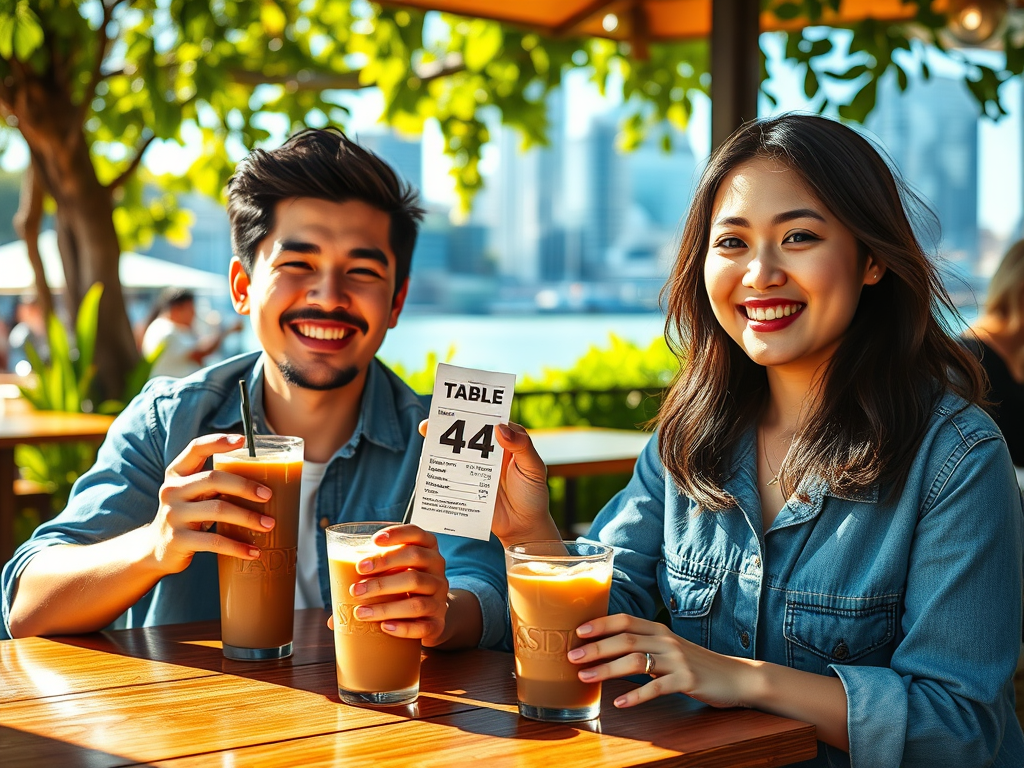
A sunny Saturday afternoon in Sydney. Two friends, Liam and Wei, are sitting at a café near Darling Harbour, sipping iced coffee after shopping for furniture.
Liam: (looking at the receipt)
Mate, did you notice your table number? It’s 44. Double four! Guess that means double the bad luck, eh?
Wei: (half-joking, half-serious)
Don’t even joke about that, Liam. You know in Chinese, “four” sounds like “death.” “Si” for “four” and “si” for “death.” I can’t believe they’d use 44 here. I should’ve asked for a different table.
Liam:
Wei, you’re in Australia, not Beijing. Nobody here’s cursing you with their table numbers. It’s just a coincidence—numbers don’t have magical powers.
Wei:
It’s not magical, it’s cultural. My family never used 4 in anything important—no apartment numbers, no phone numbers ending with 4, not even car plates. My cousin once bought a car with a 4 in the number, and two months later he crashed it. Total write-off.
Liam: (grinning)
Or maybe he’s just a bad driver? Come on, if 4 were really that deadly, every fourth house on the street would be haunted. Imagine the real-estate chaos!
Wei:
You laugh, but developers in some Sydney suburbs skip the 4th floor number on buildings just to attract Asian buyers. They go from 3 to 5 like it’s no big deal. It is taken seriously.
Liam:
I’ve seen that! And I think it’s just clever marketing, not proof of cosmic danger. If people are scared of a number, the builder’s not going to argue—they just print one less number on the lift buttons and everyone’s happy.
Wei:
Still, you can’t deny how deep the belief runs. My mum even avoided giving gifts in sets of four—said it brings bad luck. Once, a friend gave her four bowls as a housewarming gift, and she re-gifted them instantly.
Liam: (laughing)
That’s wild. I mean, if I gave someone four pints of beer, they’d call me generous, not cursed.
Wei: (smiling reluctantly)
That’s different. Beer cancels bad luck.
Liam:
Oh really? Is that scientifically proven or just your liver talking?
Wei: (laughs)
Alright, alright. Maybe it’s partly habit. I grew up with it. It’s hard to shake something that’s been drilled into you since childhood.
Liam:
Fair enough. I get that it’s cultural—like how some Aussies avoid walking under ladders or freak out over Friday the 13th. But here’s the thing: none of these superstitions actually cause anything. They just make us behave differently. Like, if you refuse the 4th floor apartment, someone else takes it and lives happily ever after.
Wei:
Hmm, maybe. But I can’t help feeling uneasy when I see too many 4s together. It’s like my brain’s been programmed to panic.
Liam:
Exactly. It’s not about bad luck—it’s about expectation. If you expect bad things when you see a 4, you notice them more. Psychologists call it “confirmation bias.” You remember the car crash, but not the hundred days your cousin drove safely before that.
Wei:
You’re saying it’s all in my head?
Liam:
Pretty much. But in a friendly way. (grins) Look, if numbers had real power, accountants would be wizards and lottery winners would be gods.
Wei: (laughing)
True. Still, I’ll pick seat number 5 on the flight home. Just to be safe.
Liam:
And I’ll pick seat 4. If I land fine, you owe me coffee.
Wei:
Deal. But if you crash—
Liam:
Then I guess you were right all along. But don’t worry, I’m a lucky bloke.
Wei:
(laughs) You’re also impossible to argue with.
Liam:
That’s my lucky number—one. The number of times I win these debates.
[They both laugh, sip their coffee, and watch a ferry glide past — Wei still side-eying the “Table 44” sign, while Liam raises his cup in mock triumph.]
 Science Vs Superstition
Tell Us What You Think