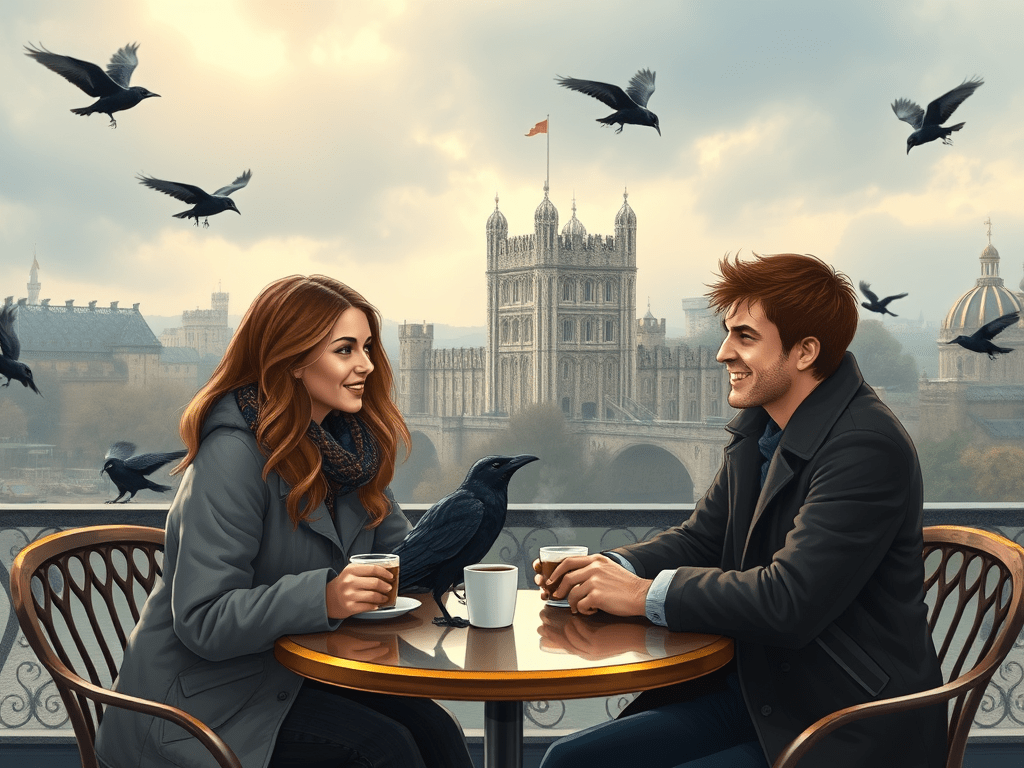
Setting: A chilly Saturday morning at a café near the Tower of London. Tourists bustle outside as ravens hop about near the ancient walls.
Amelia: (sipping her latte, eyes fixed on the Tower) You know, Oliver, I still get nervous every time I see those ravens fly off. Imagine if they all left one day — the Crown would fall, and Britain would collapse.
Oliver: (chuckles) Amelia, honestly, the country’s been through Brexit, three recessions, and four prime ministers in one year — and the ravens stayed put through all that. I think they’ve done their bit for stability.
Amelia: (smiling but serious) You joke, but it’s tradition! The legend says if the ravens ever leave, the monarchy will fall. There’s truth in old legends sometimes.
Oliver: Truth? Or a very good bit of medieval PR? The story probably started as a way to make people respect the monarchy — keep them in awe. “The birds protect the Crown,” and all that. A bit of mystique to keep peasants in line.
Amelia: Oh, come on, even scientists can’t explain everything. You can’t deny how symbolic they are. I mean, Charles II himself ordered that at least six ravens must be kept there at all times. He must’ve known something.
Oliver: He knew politics. Not prophecy. The monarchy was shaky after the Civil War — so keeping a dramatic story about magical birds guarding the realm? Perfect way to make people feel fate was on his side.
Amelia: (leans in) But what about during the Blitz? People say the ravens vanished then, and look what happened — London was bombed to bits!
Oliver: Correlation isn’t causation, Amelia. London didn’t get bombed because the ravens left; the ravens probably left because London was on fire. You’d fly off too if bombs were falling on your nest!
Amelia: (laughs) Fair point. But don’t you ever feel like some traditions hold more weight than logic? It’s comforting, in a way. Believing the ravens are keeping watch feels… reassuring.
Oliver: I get that. It’s like people carrying lucky charms or knocking on wood — it gives a sense of control in an unpredictable world. But it’s psychology, not prophecy.
Amelia: You’re such a scientist. You’d probably microchip the ravens and call it “data collection.”
Oliver: (grinning) Already done! They actually do tag them. There’s a Ravenmaster who keeps track of them — they even clip one wing so they can’t fly too far. So technically, your apocalypse is under control.
Amelia: (mock gasp) That’s cheating! The prophecy never said anything about wing clipping.
Oliver: Exactly — the whole thing is stage-managed! The Tower’s got a raven insurance policy, basically. Even if one flies away, they just replace it. “The Crown has fallen”? No, Brenda just fetched another raven from Kent.
Amelia: Still, I’d hate to be around if they all left. It’d feel like a bad omen, even if I knew it wasn’t logical.
Oliver: I get that feeling. But remember — believing something doesn’t make it true. And not believing doesn’t make it meaningless. You can appreciate the symbolism without expecting the sky to fall.
Amelia: Hmm. So you’re saying I can still enjoy the mystery, just without the panic?
Oliver: Exactly. Think of it as Britain’s longest-running mythological drama — starring birds in black capes.
Amelia: (laughs) You make it sound like “Game of Thrones: Tower Edition.”
Oliver: Pretty much! And if one ever flies away, we’ll just tweet about it — “Raven leaves Tower, monarchy still fine, latte prices still rising.”
Amelia: (raising her cup) To the ravens — guardians of the Crown, or at least great for tourism.
Oliver: (clinks mugs) Cheers to that. Long may they squawk.
 Science Vs Superstition
Tell Us What You Think