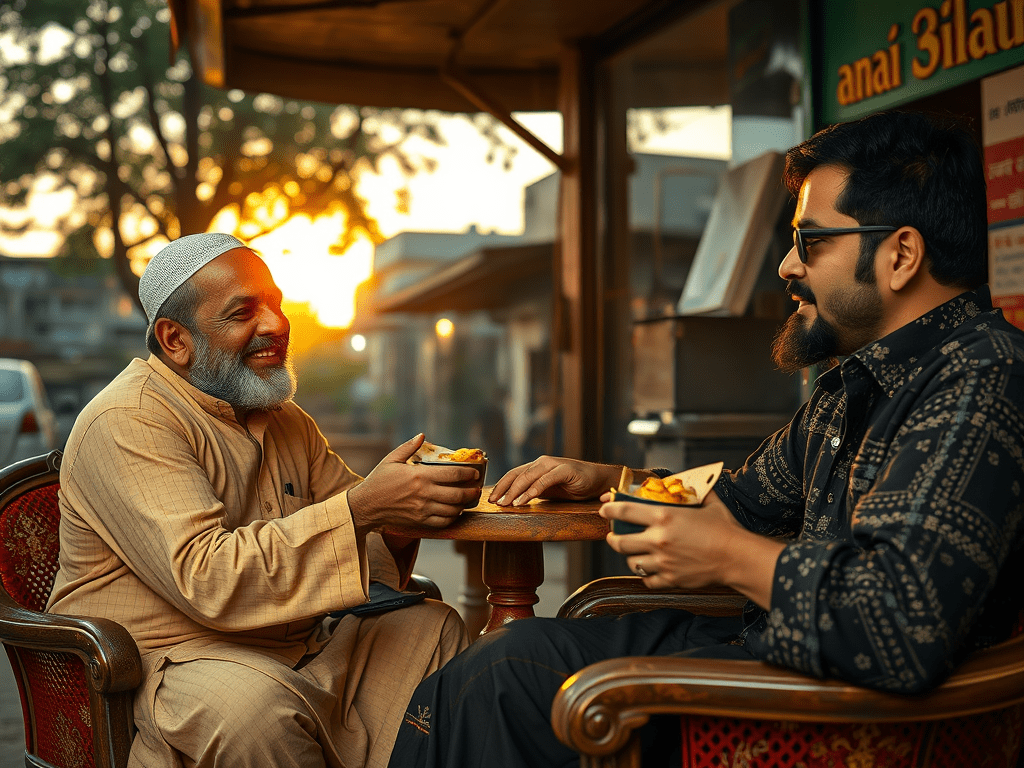
[Scene: A small tea stall in Lahore, a light breeze blowing as the evening azaan echoes faintly in the background. Ahmed and Bilal are seated on charpais, sipping chai and munching on pakoras.]
Ahmed: (adjusting the black thread with a small silver ta’wiz on his wrist)
Bilal bhai, you know, ever since I got this ta’wiz from Pir Saab, I haven’t had a single headache. And my boss, who used to yell every day, suddenly went on leave for two weeks. It works, yaar. Allah ka karam hai.
Bilal: (raises an eyebrow)
Or maybe your boss just got fed up with yelling and finally took a vacation. And your headache? Could it be because you finally started drinking water and sleeping more than four hours?
Ahmed: (grinning)
Tera dimaag sirf science science karta hai. But there are things beyond science, Bilal. Nazar lagti hai. Tu dekha nahi, how my bike got scratched the very day Shazia commented “Mashallah, it’s so shiny!” That’s nazar. Clear sign!
Bilal: (laughs)
Maybe Shazia just jinxes everything. Have you seen her cooking? Even the roti surrenders halfway.
But seriously, bro, think about it—if a piece of paper or metal wrapped in plastic can protect you from the universe’s misfortunes, wouldn’t the world be a much safer place?
Ahmed: (defensively)
This isn’t just any piece of metal, okay? It has verses from the Quran, written by a learned man who fasts and prays more than you and me combined. It’s blessed.
Bilal:
I respect that. But let me ask you something—how many ta’wiz-wearing people still get sick, have accidents, or face problems? Do you think misfortunes avoid people based on accessories?
Ahmed:
But the ta’wiz doesn’t promise miracles! It’s about protection from unseen forces. Like spiritual WiFi.
Bilal: (laughing)
If this is spiritual WiFi, your signal must be strong in Pir Saab’s zone only.
Look, I’m not saying people shouldn’t believe. If it gives you peace of mind, that’s fine. But don’t you think we should also do things to solve problems? Like go to the doctor, drive carefully, actually do our work?
Ahmed: (nods thoughtfully)
You’re not wrong. But sometimes science can’t explain everything. Like dreams, intuition, or how my mom’s duas always seem to work.
Bilal:
I agree with you there. I believe in duas too. But there’s a difference between faith and superstition. Duas come with action. You pray and you try. But with ta’wiz, people just tie it and wait for magic.
Ahmed: (smiling sheepishly)
Okay okay, you got me a little. Maybe I do rely on it more than I should. But you can’t deny—our culture is soaked in these traditions. My dadi used to say, “Beta, ta’wiz pehna karo, warna buray saaye chipak jaayenge.”
Bilal:
And my dadi used to say, “Achhi niyyat rakho, Allah sab theek karega.”
Look, Ahmed, I’m not anti-faith. I’m just pro-thinking. Believe in Allah, trust in His plan—but don’t outsource responsibility to a pendant.
Ahmed: (grins)
You should run for parliament, bhai. “Pro-thinking Party of Pakistan!”
Bilal: (chuckles)
Only if you’ll be my Minister of Superstitious Affairs. First decree: mandatory chai and logic sessions.
Ahmed: (laughing, clinks chai glass with him)
Deal! But I’m keeping my ta’wiz. At least until my boss comes back.
[They laugh, sip chai, and continue their spirited but friendly debate as the sun sets over Lahore’s skyline.]
 Science Vs Superstition
Tell Us What You Think