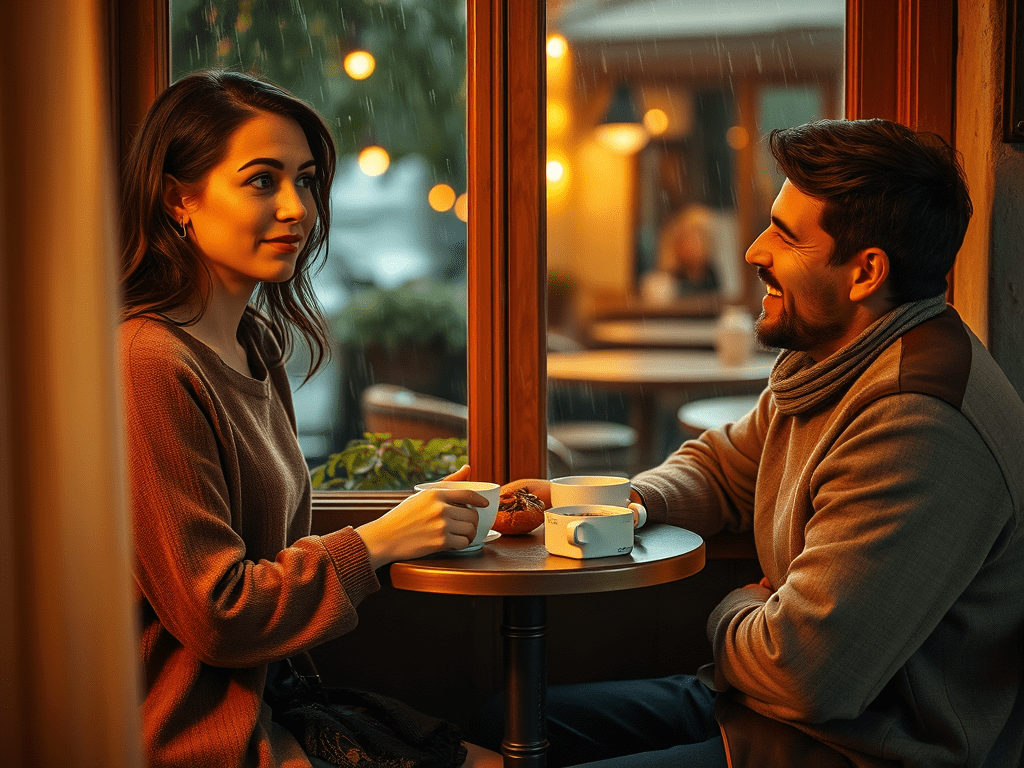
Setting: A cozy café in the Lozère region of France, near where the Beast of Gévaudan legend originated. It’s late afternoon, with a soft drizzle outside. Two friends, Éloïse and Marc, sit sipping coffee and eating pastries.
Éloïse: (looking out the window nervously)
Marc… did you hear that howl last night? I swear, it sounded exactly like what my grandmother described. Long, haunting, almost human. I think the Beast of Gévaudan is back.
Marc: (chuckles)
Éloïse, please tell me you’re not serious. It was probably a dog. Or a particularly ambitious fox. Or maybe Jean-Luc’s new hunting app with animal sounds again?
Éloïse:
No, no—this was real. I could feel it. The hairs on my arms stood up. My cousin in Mende saw something huge and shadowy near the forest. He says it walked on two legs, just like the old stories!
Marc:
Or he was watching Netflix in the woods and mistook a bear for Bigfoot. Éloïse, the Beast of Gévaudan was probably a wolf—or several wolves. You know that, right? This legend has been debunked a dozen times by historians and zoologists.
Éloïse: (leaning in conspiratorially)
But that’s the thing, Marc. What if it’s not just a wolf? My grandmother used to say it was a cursed creature, born of evil. It attacked over a hundred people in the 1700s. Some bodies were half-eaten, and it never behaved like a normal predator. Even King Louis XV sent hunters and still—nothing caught it.
Marc:
Because 18th-century France didn’t have GPS or drones. Come on, Éloïse, you really think a supernatural beast roamed the countryside undetected? Maybe it was a large wolf-dog hybrid. Or—my favorite theory—a hyena someone smuggled in and lost.
Éloïse: (mockingly)
Oh yes, because a hyena in rural France makes so much more sense than a legendary creature tied to ancient curses. Maybe it stopped to buy a baguette too?
Marc: (laughs)
Touché. But you have to admit, humans are excellent at making myths. We crave drama. Think of all the spooky stuff that turns out to be explainable. Remember that time you thought your apartment was haunted because of the flickering lights?
Éloïse: (sighs)
It was haunted. Until you replaced the faulty wiring.
Marc:
Exactly. Science! Rational thinking! We solve problems with observation and deduction, not ghost stories and werewolves.
Éloïse:
But isn’t there room for mystery, Marc? Not everything has to be dissected. These legends give us a connection to the past, to our culture. The Beast isn’t just a story—it’s a symbol. Of fear, yes, but also of how people used to understand danger.
Marc:
I agree. Legends are beautiful—as legends. They reflect real fears: rogue predators, disease, war, isolation. But when we let myth override reason, we lose our grip on what’s actually happening. Like people refusing vaccines because of old folk beliefs.
Éloïse: (smiles)
Always the scientist. You’d explain away magic if a unicorn trotted past right now.
Marc:
Only after I took samples of its hair for genetic testing. Then I’d explain it.
Éloïse: (laughs)
Alright, fair enough. Maybe you’re right. Maybe the Beast was just a wolf with good PR.
Marc: (grinning)
Exactly. A terrifying wolf with excellent branding. Probably had a marketing agent.
Éloïse:
Still… tonight, I’m locking my doors. Just in case.
Marc:
And I’ll leave out a croissant for your beast. Everyone in France deserves good pastry—even legendary monsters.
[They both laugh, the drizzle turning into a downpour outside as they finish their coffee.]
 Science Vs Superstition
Tell Us What You Think