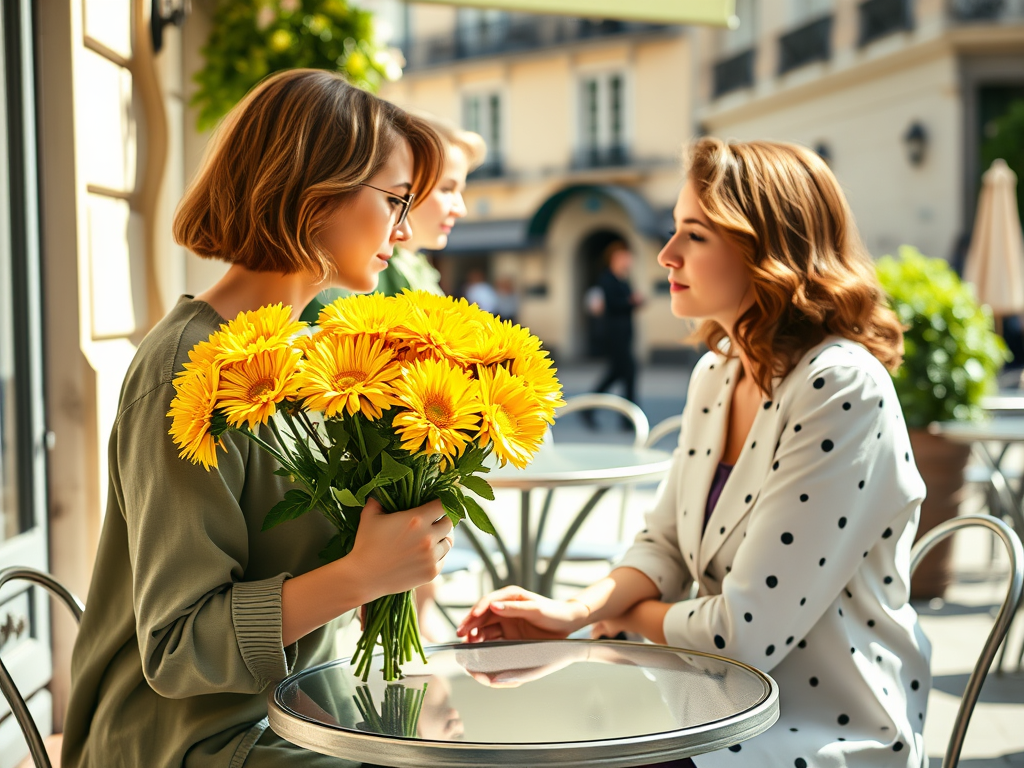
[Scene: A sunny afternoon in Lyon. Léa and Camille are sitting at an outdoor café, sipping coffee. On the table, a cheerful bouquet of chrysanthemums that Camille just bought from a nearby florist. Léa looks visibly uncomfortable.]
Léa: [grimacing] Camille… tell me you didn’t just bring chrysanthemums to a coffee date.
Camille: [grinning] Why not? They’re beautiful, aren’t they? Look at these golden ones — they’re like little suns!
Léa: [lowering her voice] You know they’re for graves, right? You only bring chrysanthemums to cemeteries here. It’s… it’s bad luck otherwise!
Camille: Léa, come on. It’s just a flower. In Japan, chrysanthemums are symbols of longevity and happiness! Are the Japanese cursed now?
Léa: [laughing nervously] That’s Japan! Here in France, it’s different. You know what happened to my aunt last year? She put chrysanthemums in her living room, and a week later, the water heater broke, and they had to spend Christmas in a freezing house. That’s what I’m talking about.
Camille: [chuckling] Léa, I think your aunt’s boiler had more to do with rusty pipes than flower placement.
Léa: Maybe, but why take the risk? You wouldn’t put a ladder in your hallway and walk under it for fun, would you?
Camille: True, I wouldn’t, but that’s because I’m clumsy and would probably knock it over! But flowers? They don’t have magical powers. They’re just… plants. Besides, if we avoid every tradition just because of superstition, we’d never do anything fun. No black cats, no opening umbrellas indoors, no Friday night plans if it’s the 13th.
Léa: [defensive] It’s not about fun; it’s about respect. We’ve grown up with these customs. People would stare if they saw you walking into someone’s home with chrysanthemums. My grandmother would faint!
Camille: So you’re saying I should tailor my bouquet choices to avoid traumatizing grandmothers?
Léa: Exactly! [smiling] It’s just polite.
Camille: Okay, fair point about social norms. But don’t you think it’s interesting how flowers can have such wildly different meanings in different cultures? In the UK, they give chrysanthemums in cheerful birthday arrangements. Are they all walking around under a death curse?
Léa: Maybe that explains British weather.
Camille: [bursting out laughing] Oh, come on! You can’t blame the rain on flowers!
Léa: [grinning] Maybe not, but still — why challenge tradition? Just get roses or tulips next time. Nobody’s offended by tulips.
Camille: You know, part of me wants to start a movement: “Free the chrysanthemums!” Imagine: a campaign where we reclaim them as symbols of joy. You’d join, right?
Léa: Only if I can wear a protective charm. And carry a fire extinguisher. Just in case.
Camille: [mock serious] Deal. But on one condition — next time, you let me bring a little chrysanthemum bouquet to your place. Just one. A test run.
Léa: [groaning] Camille…
Camille: I promise, if your cat starts speaking Latin or your toaster explodes, I’ll take full responsibility.
Léa: [laughing] Fine! But if my curtains catch fire, you’re buying me new ones.
Camille: Deal. And maybe, just maybe, you’ll see it’s not the flowers bringing misfortune — it’s just life being unpredictable.
Léa: We’ll see. But don’t come crying to me when your washing machine floods next.
Camille: [raising her coffee cup] To rational rebellion — and very confused florists.
Léa: [clinking cups] And to stubborn friends who think they can outwit centuries of French superstition.
[They both laugh, the chrysanthemums catching the sunlight between them, and for a moment, tradition and reason share the same table without argument.]
 Science Vs Superstition
Tell Us What You Think