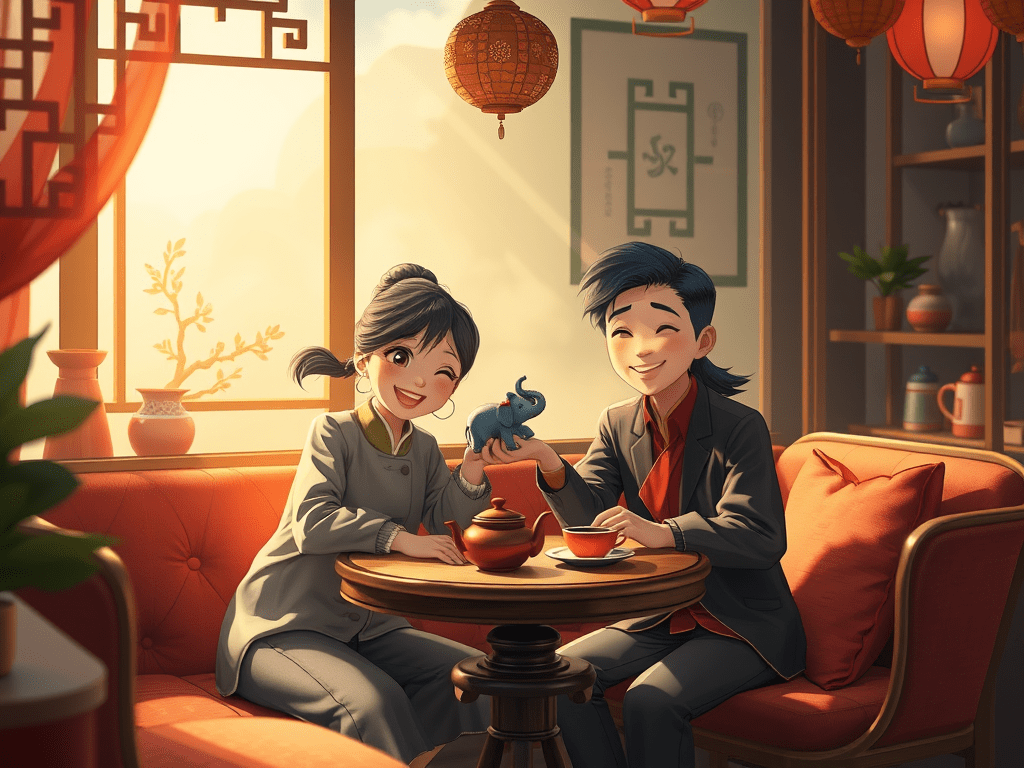
[Scene: A cozy tea shop in Shanghai. Li Hua and Chen Wei are sitting at a small wooden table, sipping jasmine tea. On the table is a tiny elephant figurine that Li Hua proudly just bought.]
Li Hua: (grinning and holding up the elephant figurine) Look at this, Wei! Isn’t it adorable? I found it at the antique market. They say elephants bring strength and wisdom — I could use both at work right now!
Chen Wei: (chuckles) It’s cute, I’ll give you that. But you know a figurine can’t really give you strength or wisdom, right? That’s… kind of your job.
Li Hua: Oh, come on! You’re always so logical. It’s not magic—it’s symbolism. Elephants are powerful and intelligent animals. Keeping a symbol of that nearby reminds me to be strong and make smart choices.
Chen Wei: Hmm, okay, fair. But don’t you think it’s your own effort that makes you strong and wise, not some piece of carved wood?
Li Hua: It’s both! Last year, when I had that big presentation, remember how nervous I was? I had my little elephant keychain in my pocket. I kept touching it when I felt anxious. And guess what — I nailed that presentation!
Chen Wei: (smiling) Maybe because you practiced for two weeks straight and memorized every slide?
Li Hua: Well, sure. But the elephant helped center me! It’s psychological.
Chen Wei: Ah, now we’re getting somewhere — that I can understand. It’s like a placebo effect. Your belief in the elephant gave you confidence, even if the elephant itself didn’t do anything.
Li Hua: Placebo, talisman, lucky charm — call it what you want! It worked. And anyway, elephants are wise. Did you see that documentary where an elephant mourned its dead friend? That’s emotional intelligence, my friend.
Chen Wei: True, elephants are fascinating. Their brains are huge, their memories are impressive, they show empathy — but that’s their nature. It doesn’t mean a figurine on your desk transmits that into your brain.
Li Hua: Ha! Are you sure? Maybe you just haven’t unlocked the energy flow.
Chen Wei: (laughing) Oh no, now we’re in “energy flow” territory. Look, I’m not saying you should throw away your elephant. If it comforts you or reminds you of positive qualities, great! But let’s not confuse that with actual cause and effect.
Li Hua: Fine, Professor Chen. But you can’t deny humans have always used symbols. Even you wear that watch your grandfather gave you — don’t tell me it’s just to tell time.
Chen Wei: Okay, fair point. I wear it because it connects me to him. But I don’t think it gives me his mathematical genius!
Li Hua: Maybe you’d be surprised. (winks)
Chen Wei: (teasing) Right, so if I strap an elephant to my wrist, I’ll become CEO next year?
Li Hua: Only if you believe hard enough!
Chen Wei: (laughs) Well, I’ll believe in you, at least. That’s probably more effective.
Li Hua: Aww, now you’re the wise one. See? You are absorbing some elephant spirit after all!
Chen Wei: Watch out, or I’ll start stomping around the tea shop.
Li Hua: (grinning) Just don’t forget to raise your trunk for good luck.
[They both laugh, clinking their teacups together, while the little elephant figurine watches silently from the table.]
 Science Vs Superstition
Tell Us What You Think