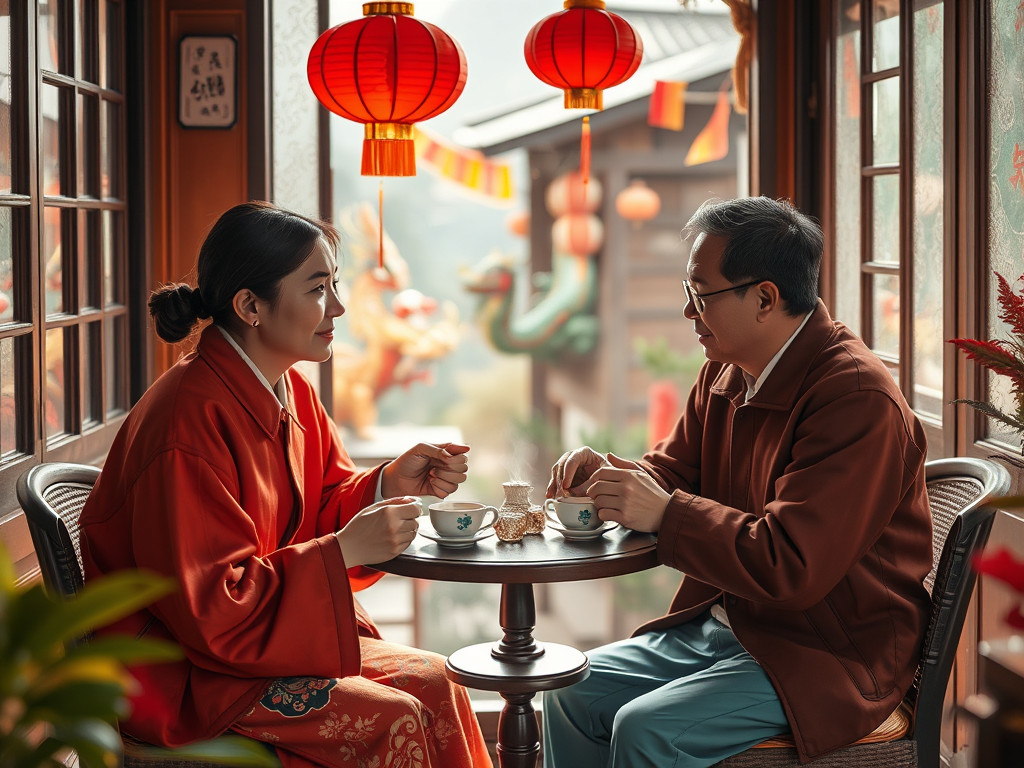
[Scene: A small tea shop in Hangzhou. Two friends, Wei and Chen, are sitting at a corner table sipping jasmine tea. Outside, red lanterns and dragon banners flutter in the breeze for the upcoming Dragon Boat Festival.]
Wei (the superstitious one):
grinning Chen, have you noticed? Ever since I put up that dragon statue at home, everything’s been going my way! I got a promotion, my mom’s knee pain got better, and even my cat stopped knocking over the flower pots!
Chen (the rational thinker):
laughing Wei, are you sure it’s the dragon statue and not, say, your hard work, your mom’s new medication, and maybe the cat just… finally growing up?
Wei:
mock gasp Oh please, Chen! You’re too logical. Everyone knows dragons bring happiness and good fortune. It’s been that way for centuries. Why else do you think we have dragon dances, dragon boat races, and dragon carvings everywhere?
Chen:
sipping tea thoughtfully True, dragons are everywhere in our culture — but they’re a symbol, Wei, not an actual cause of luck. It’s like how a four-leaf clover is seen as lucky in Ireland, or a rabbit’s foot in the West. That doesn’t mean they cause good things to happen.
Wei:
smirking Well, tell that to my uncle! He swears his business started booming after he hung a golden dragon painting in his office. Customers just kept pouring in.
Chen:
grinning Maybe his new marketing strategy had something to do with it? You know, the one where he offered free delivery and put his store on that food delivery app?
Wei:
waves hand dismissively Sure, sure, but don’t you think the dragon helped? It’s not just about marketing — it’s about the energy you invite in. Haven’t you heard of feng shui?
Chen:
Oh, I’ve heard of it. But just because something is popular doesn’t make it scientifically true. Look, Wei, I respect tradition — dragons are beautiful, and they’re part of our identity. But if we claim they cause success, we’re ignoring the real factors — like effort, timing, and sometimes plain luck.
Wei:
frowning in mock indignation You’re no fun! Next you’ll tell me my red underwear on Chinese New Year doesn’t protect me from bad luck.
Chen:
laughing Hey, if it gives you confidence, wear all the red you want! But remember, it’s you who faces the challenges, not your underwear or the dragon on your shelf.
Wei:
chuckling Okay, okay, fair point. But explain this: why did my neighbor, who refused to join the dragon boat festival last year, get stuck in traffic for five hours that very day? Coincidence?
Chen:
smiling knowingly Total coincidence, my friend. Correlation isn’t causation. Maybe next time, I should join you at the festival just so you don’t pin my late arrival on the dragons!
Wei:
laughing Fine, maybe I do stretch things sometimes. But you have to admit — the world’s more fun with a little magic in it.
Chen:
smiling warmly I can agree with that. As long as we remember where the magic ends and our choices begin.
Wei:
raising his tea cup To dragons, hard work, and maybe a little harmless superstition?
Chen:
clinking cups To friendship, reason — and okay, maybe a little dragon charm on the side.
[They both laugh as the sounds of a distant dragon dance echo through the street, blending old traditions with modern life.]
 Science Vs Superstition
Tell Us What You Think